Why every project still starts on paper
Paper is fast, honest and shared. Here is how an hour with pencils saves us days of polishing the wrong idea.
 Lena Brandt
4 min read
Lena Brandt
4 min read
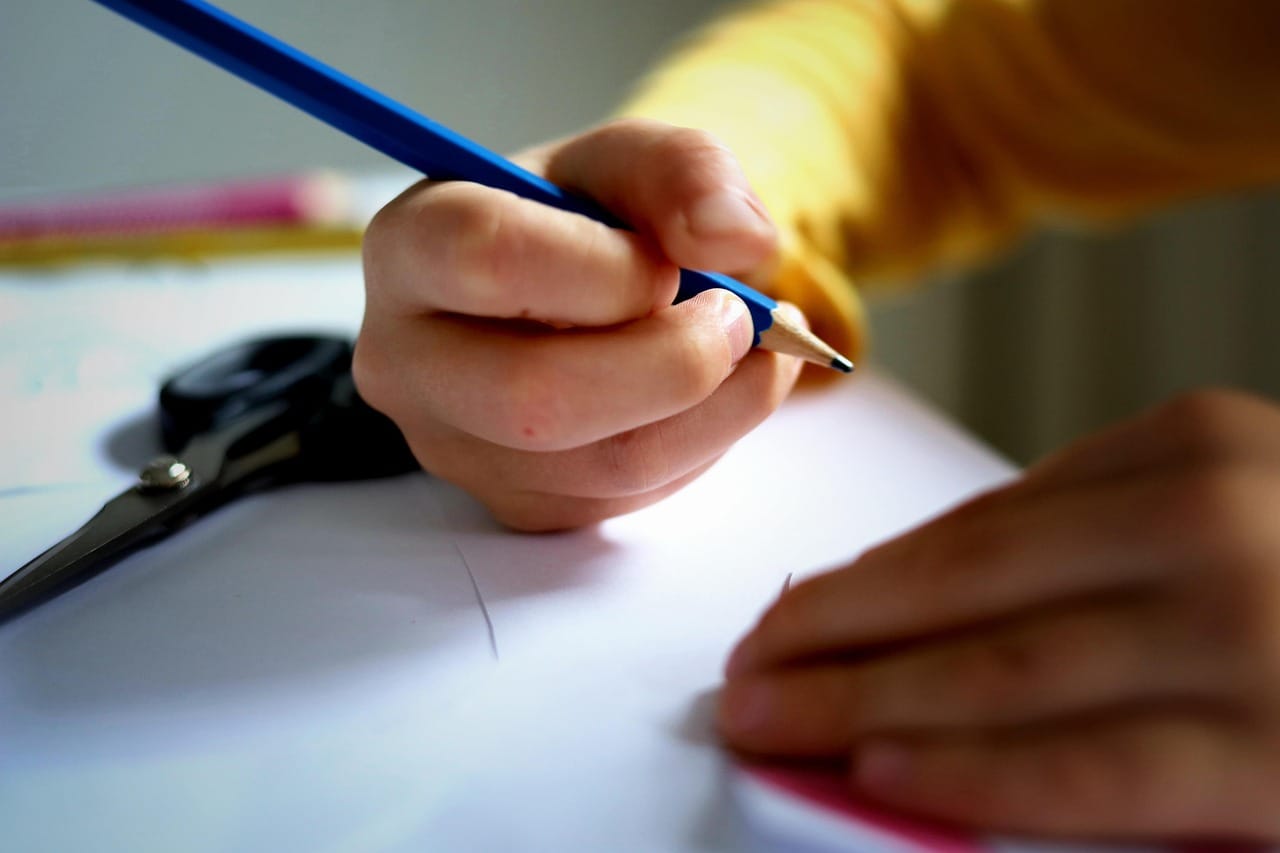
Every project at Folio starts on paper. Not on a screen, not in a shared online board, but with pencils, cheap paper and a large table. New clients sometimes find this charming. Younger designers who join us sometimes find it frustrating. We think it is one of the most important habits we have, and this is why.
Paper is fast
The first reason is simple: paper is faster. Drawing a rough layout takes seconds. Drawing ten takes a few minutes. On a screen, even a quick layout involves choosing a typeface, a size and a colour, and suddenly you have spent twenty minutes on details before you know if the idea is any good.
On paper, you cannot get distracted by details. A sketch is too rough to be precious. That makes it easier to throw away, and throwing away ideas quickly is what the start of a project is for.
The first idea is rarely the best one. Paper makes it cheap to get to the tenth.
Lena Brandt
Paper is honest
A rough sketch cannot hide a weak idea behind nice colours and good photographs. If a layout does not work as a few lines on paper, it will not work on screen either, however polished it looks. We often put our sketches next to finished screens at the end of a project and see that the strongest ideas were already there in the first hour.

Paper is shared
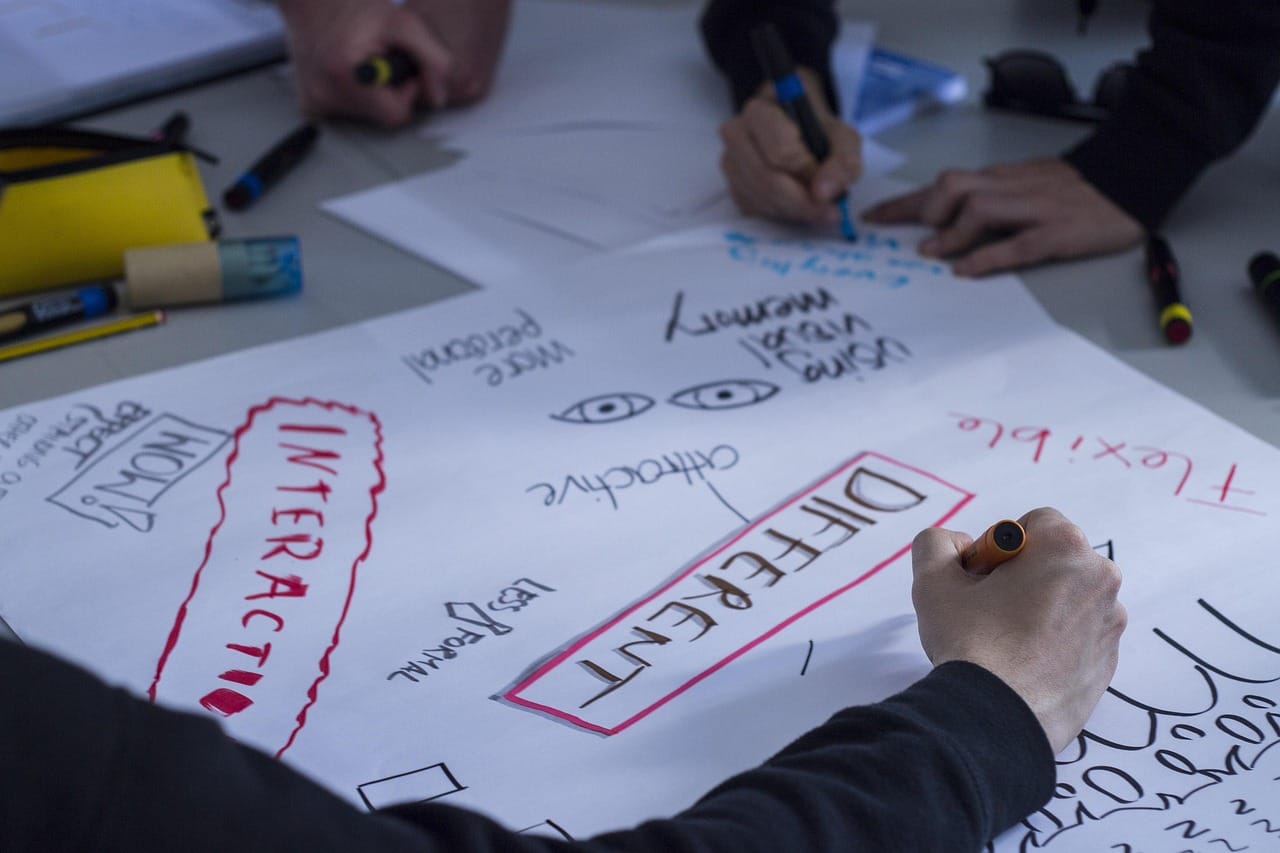
When five people sit around a table covered in paper, everyone can see everything at once. Anyone can pick up a pencil and add something. Nobody is waiting for the person with the mouse to finish.
This matters most when clients are in the room. Clients are often nervous about drawing, but they will happily point, circle and write notes on a sketch. Some of our best ideas have come from a client scribbling on a sheet of paper and saying something like this.
How we do it
Our sketching sessions follow a loose routine.
- Everyone sketches alone first. Ten minutes, as many ideas as possible, no talking. This stops the loudest person in the room from deciding the direction.
- Everything goes on the wall. We pin every sketch up, including the bad ones.
- We talk about what works. Not what is wrong, only what is interesting. Each person picks two ideas from someone else.
- We sketch again. Now combining and building on the best parts.
- Only then do we open a laptop.
The whole thing takes about an hour. It sounds slow, but it saves us days of polishing the wrong idea.
What happens to the sketches
We keep them. Every project has a folder of sketches in a large drawer at the back of the studio. We look back at them more often than you might think: when a client asks why we chose a direction, when a project is extended, or when we simply want to remember how an idea grew.
A few of the best ones are framed on the studio wall. Visitors usually assume they are finished drawings. They are almost always the first ten minutes of a project.
When paper is not enough
We are not against screens. Motion needs to be seen moving. Digital products need to be tested on real phones. Typography needs to be checked at the right size. We move to the computer the moment paper stops being useful, and not a moment before.
The trick is knowing when that moment arrives. After many years, we have one simple test: when we start arguing about details that paper cannot show, it is time to open the laptop.
What to sketch with
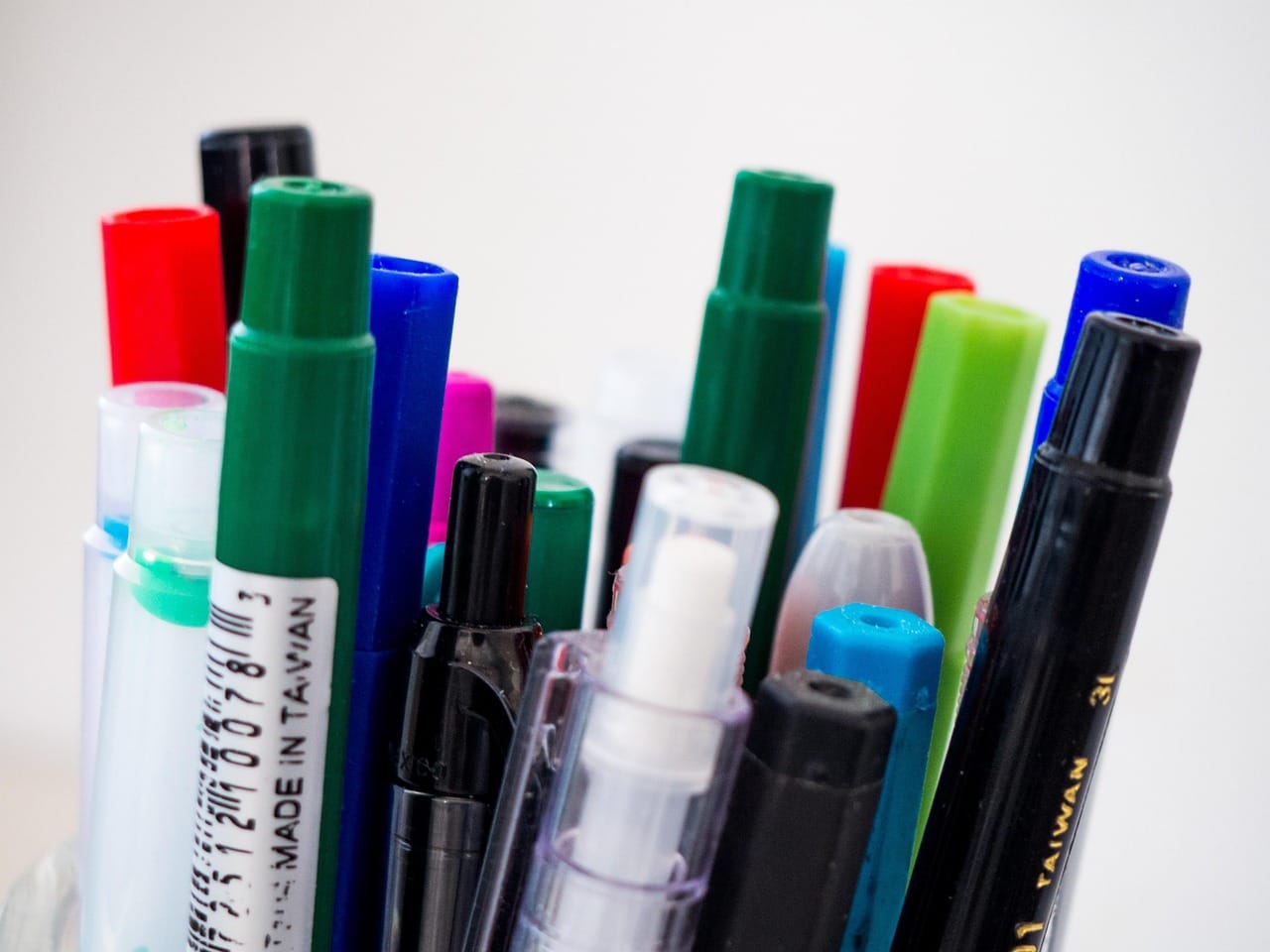
People often ask about our tools, expecting something special. The truth is boring. We use cheap copy paper by the box, soft pencils, a few black markers and a small number of coloured markers for highlighting. Nothing precious. The moment a sketchbook becomes expensive, people start being careful in it, and careful sketches are slow sketches.
The only thing we are strict about is the size of the paper. We sketch layouts at roughly the size they will be seen: phone screens on small cards, posters on large sheets, book covers at book size. Scale changes how a design feels, and sketching at the right size catches problems early.
Sketching with clients
For clients who feel shy about drawing, we sometimes print simple frames on paper: an empty phone screen, a book cover or a sign. It is much easier to draw inside a frame than on a blank page. Clients who swore they could not draw have filled a dozen frames in an hour.
Try it
If you work mostly on screens, try one project the paper way. Buy a stack of cheap paper and a box of soft pencils. Give yourself an hour and no laptop. Draw badly and draw a lot. We think you will be surprised how much further you get.